
The overbite vs underbite difference comes down to which teeth sit in front. With an overbite, the upper front teeth overlap the lower ones too much. With an underbite, the lower teeth close in front of the uppers. A crossbite is its own problem: some teeth bite on the wrong side of their partners.
Dr. Tara Gostovich, an ABO board-certified orthodontist, checks every bite at a complimentary consultation in Marlboro, NJ. Book a visit to learn which one you or your child has.
Overbite vs underbite: what’s the difference?
Orthodontists sort types of bite problems by how the upper and lower teeth meet when you close. A little overlap is normal. Trouble starts when that relationship is too deep, reversed or off to one side.
- OverbiteThe upper front teeth cover too much of the lower teeth, or stick out past them.
- UnderbiteThe lower front teeth rest in front of the upper teeth, often with a prominent chin.
- CrossbitesSome upper teeth close inside the lower teeth, in front, in back or on one side.
Comparing an overbite vs underbite is mostly about direction. Either one can come from tooth position, jaw growth or both, and that distinction shapes treatment.
Why do bite problems matter?
A bite that doesn’t line up isn’t only cosmetic. Depending on the type, it can:
- ✓Wear down or chip teeth unevenly
- ✓Strain the jaw joints and chewing muscles
- ✓Leave protruding front teeth more likely to be injured
- ✓Push the lower jaw to one side as it grows, in some crossbites
Whether you’re weighing overbite vs underbite or something in between, Dr. Gostovich also looks for habits such as mouth breathing that can affect how the jaws develop.
How does an orthodontist tell overbite vs underbite apart?
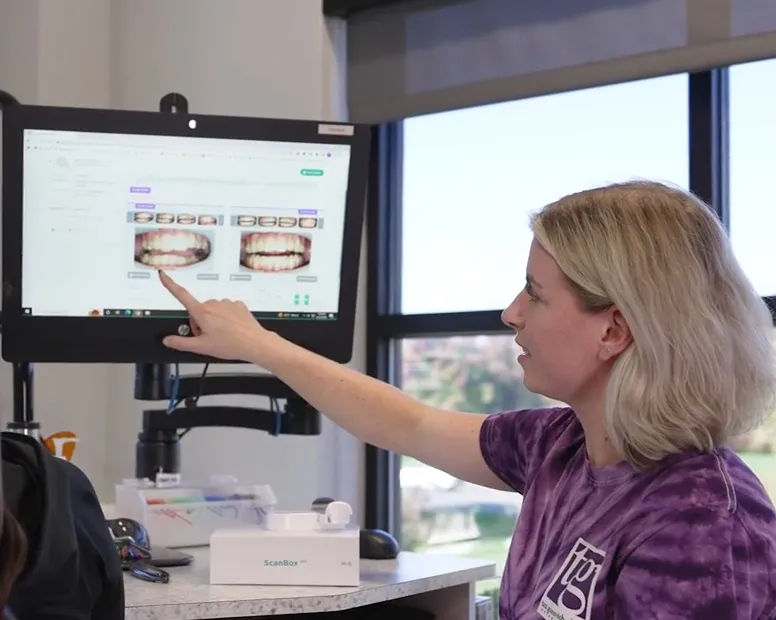
At your visit, Dr. Gostovich examines how the teeth meet, checks jaw position from the side and takes a quick iTero 3D scan. Telling overbite vs underbite apart is usually simple. The real question is whether the teeth or the jaws are the cause.
How does overbite treatment work?
Mild to moderate overbites usually respond well to braces or Invisalign, which move the teeth into a healthier overlap. Small elastics often help shift the bite.
In growing kids, overbite treatment can also guide the jaws. A MARA appliance, typically for ages 11 to 15, or Invisalign with mandibular advancement for teens encourages the lower jaw forward while it’s still developing.
What does underbite treatment involve?
Timing matters most here. For children around ages 7 to 10, a face mask can encourage the upper jaw to grow forward, which is one reason early orthodontic treatment can be so valuable.
Teens and adults with mild cases often do well with braces or aligners alone. When the jaw itself is significantly out of position, underbite treatment for adults 18 and older may combine orthodontics with jaw surgery.
What is a crossbite?
In this bite, one or more upper teeth close inside the lower teeth instead of outside. It can involve a single tooth, the front teeth or the back teeth on one or both sides.
Back-teeth crossbites in kids often trace to a narrow upper jaw. Left alone, they can encourage the lower jaw to drift sideways each time a child closes.
How does crossbite correction work?
For growing children, crossbite correction usually starts by widening the upper jaw. Our Invisalign Palatal Expander does this with removable trays and no keys or screws to turn.
Single teeth caught in the wrong position are typically moved with braces or aligners, sometimes alongside expansion.
Which approach fits your bite?
Most types of bite problems are treated with tooth movement, growth guidance in kids or a mix of both. Explore the options on our orthodontic treatments page.
For adults with a significant jaw imbalance, surgical orthodontics pairs 12 to 18 months of braces or aligners with surgery by an oral and maxillofacial surgeon, followed by finishing.
The American Association of Orthodontists recommends a first evaluation by age 7, a good time to catch an overbite vs an underbite pattern while growth can still help.
Frequently asked questions
Can an overbite or underbite fix itself?
Usually not. Children don’t typically outgrow them, and some become more noticeable as the jaws grow. Early overbite or underbite treatment can use that growth to your child’s advantage, which is why an evaluation by age 7 is worthwhile.
Can Invisalign fix bite problems?
In many cases, yes. Invisalign can correct a range of bite issues, especially mild to moderate ones, often with elastics. Severe jaw-based problems may need braces, a growth appliance or surgery, and Dr. Gostovich will tell you honestly which fits.
Do adults need surgery for an underbite?
Not always. Many adults with a mild underbite get good results from braces or aligners alone. Surgery is reserved for significant jaw imbalances and is planned together with an oral and maxillofacial surgeon.
Get a clear answer about your bite
Not sure if you’re looking at an overbite vs an underbite? Visit us in Marlboro, NJ for a complimentary exam. Call or text us at (732) 617-1211, or pick a time online.