
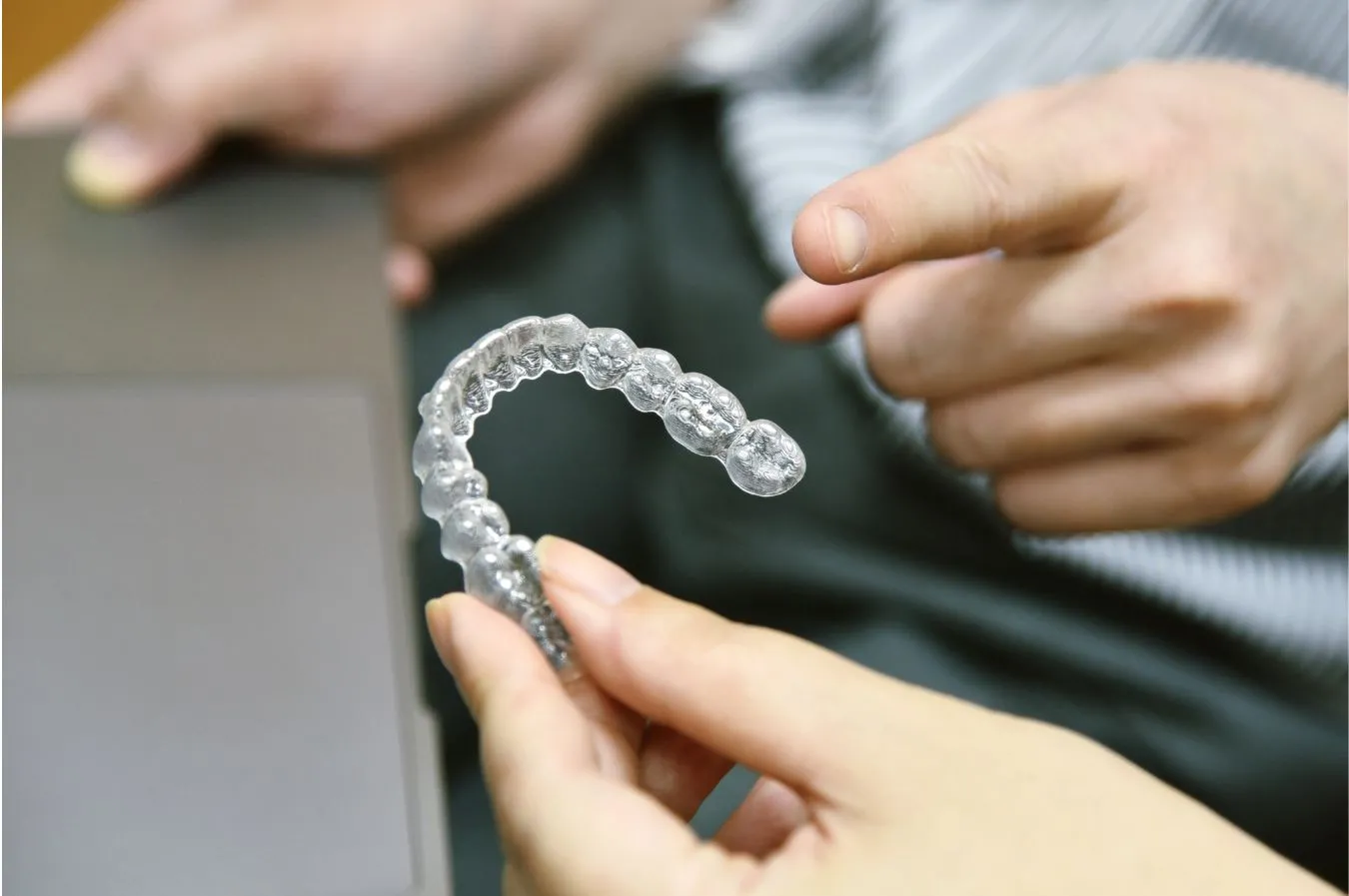
Invisalign typically costs between $3,000 and $8,000, but your actual price depends on a few things. It might be more affordable than you think. That price range is often comparable to traditional LightForce braces, and with insurance coverage plus flexible low monthly payment options, Invisalign may fit your budget better than you'd expect.
At TG Orthodontics, we walk patients through every detail of Invisalign pricing so they know exactly what to expect before starting treatment. Let's break down everything that goes into the cost of your smile.
What Is Invisalign and Why Is It So Popular?
Invisalign is a clear aligner orthodontic system that uses custom-made, removable plastic trays to gradually straighten teeth without metal brackets or wires. Instead of traditional hardware, you wear nearly invisible aligners that shift your teeth into their ideal positions over time.
Over 17 million patients worldwide have been treated with Invisalign, making it one of the most widely used orthodontic treatments available. So what makes Invisalign different from other clear aligners you might see advertised online? It comes down to two things: the materials and the expertise behind your treatment.
Invisalign aligners are made from SmartTrack material, a proprietary plastic developed specifically for tooth movement. This material applies gentle, consistent pressure while remaining comfortable against your gums and cheeks. Your treatment plan is created using ClinCheck software, which generates a detailed 3D model of your teeth and maps out every stage of your smile before you even start. That level of precision matters.
What really sets Invisalign apart is that it's prescribed and monitored by a board-certified orthodontist, your smile expert. This isn't a mail-order solution where you take impressions at home and hope for the best. Your smile expert examines your teeth, jaw, and bite relationship to create a treatment plan tailor-made for your smile. We do not believe in cookie-cutter approaches!
The popularity of Invisalign among teens and adults makes sense when you consider the lifestyle benefits. Aligners come out for meals, photos, and special occasions. Most people won't even notice you're wearing them during everyday conversations. Because there are no brackets to break or wires to poke, you'll likely spend less time dealing with orthodontic emergencies.
How Invisalign Treatment Works (Step by Step)
Understanding the treatment process helps explain why Invisalign costs what it does. Each step involves specialized technology, professional expertise, and custom manufacturing. Here's what the process looks like at TG Orthodontics.
Your Initial Visit
Your Invisalign experience starts with a visit to your smile expert. During this visit, you'll receive a thorough examination of your teeth, gums, and bite. Most practices now use digital 3D scanners instead of goopy impressions. The scanner captures thousands of data points to create a precise model of your mouth in minutes. This visit is also when you'll discuss your goals, ask questions, and learn whether Invisalign is the right fit for your smile.
Your Custom Treatment Plan
Your smile expert uses ClinCheck software to design your entire treatment from start to finish. You'll actually see a digital preview of how your teeth will move at each stage and what your final smile will look like. This isn't a generic template. It's a plan built specifically for your teeth by a specialist who understands the biomechanics of tooth movement.
From Plan to Production: Aligner Manufacturing
Your custom aligners are precision-manufactured by Align Technology based on your approved ClinCheck treatment plan. Each set is precisely calibrated to move specific teeth by specific amounts. Depending on your case, you might receive several months' worth of aligners at once or pick up new sets at periodic visits.
Wearing Your Aligners Day to Day
This is your part of the process. Wear each set of aligners for 20 to 22 hours per day, removing them only for eating, drinking anything besides water, and brushing your teeth. Most patients switch to a new set of aligners every one to two weeks, depending on their smile expert's instructions. The routine becomes second nature fast.
Check-Ins and Refinements
Throughout treatment, you'll have periodic visits so your smile expert can monitor your progress and make any necessary adjustments. Some patients need refinement aligners toward the end of treatment to perfect their results. Practices that use DentalMonitoring technology can track your progress remotely, which means fewer in-practice visits while still maintaining close supervision of your treatment.
Benefits of Invisalign That Justify the Investment
When you're weighing the cost of Invisalign, it helps to understand what you're actually getting for your money. The benefits go far beyond straight teeth.
How Does Invisalign Fit Into Your Daily Life?
The clear aligners are virtually invisible during normal conversation. This matters whether you're a professional giving presentations, a teen getting through high school social life, or anyone who simply prefers not to announce their orthodontic treatment to the world. Smile confidently throughout your treatment, not just after it's complete.
There's no list of forbidden foods with Invisalign, either. Popcorn at the movies? Corn on the cob at a summer barbecue? Go for it, since the aligners come out for meals. Simply remove your aligners before eating and put them back in after brushing. That kind of freedom makes a real difference in your daily quality of life during treatment.
Is Oral Hygiene Easier with Invisalign?
Keeping your teeth clean with LightForce braces requires threading floss under wires and brushing around brackets. With Invisalign, remove your aligners and brush and floss normally. This isn't just about convenience. Better oral hygiene during treatment means healthier gums and a lower risk of cavities.
Does Invisalign Mean Fewer Emergency Visits?
Broken brackets and poking wires are common complaints with traditional braces. These issues require unplanned trips to the practice for repairs. Invisalign aligners don't have components that break or irritate your mouth, so you'll deal with fewer disruptions to your schedule. Fewer surprise visits means less time away from work or school.
Can You Preview Your Results Before Starting?
Remember that ClinCheck treatment plan? You'll see your projected results before you commit to treatment. This takes the guesswork out of orthodontics and gives you realistic expectations about what Invisalign can achieve for your smile.
Is Invisalign Comfortable to Wear?
SmartTrack material is smooth against your cheeks and gums. No sharp edges, no metal components, and no periodic tightening visits that leave your teeth sore for days. Most patients adjust to wearing aligners within the first few days.
At TG Orthodontics, we also offer DentalMonitoring, which uses smartphone technology to track your progress between visits. Scan your teeth at home, and your smile expert reviews the images to make sure everything is moving according to plan. Staying on track without as many practice visits is a real advantage for busy schedules.
Invisalign vs. Braces: How Do the Costs Compare?
One of the biggest misconceptions about Invisalign is that it costs significantly more than traditional braces. Let's look at the real numbers.
| Treatment Option | Typical Cost Range | Key Considerations |
|---|---|---|
| Traditional Metal Braces | $3,000–$7,000 | Most affordable option; visible brackets and wires |
| Ceramic Braces | $4,000–$8,000 | Less visible than metal; brackets can stain |
| Invisalign | $3,000–$8,000 | Nearly invisible; removable; requires discipline |
| LightForce Custom Braces | $4,000–$8,000 | 3D-printed for your teeth; efficient treatment |
| DIY Aligner Kits | $1,500–$2,500 | No in-person supervision; limited to mild cases |
Cost ranges based on national industry estimates and may vary by location and provider.
What About Those Cheaper Mail-Order Aligners?
You've probably seen ads for direct-to-consumer aligner companies promising straight teeth for a fraction of the cost. Here's what those ads leave out: these services skip the in-person examination, don't take X-rays to check for underlying issues, and provide minimal professional oversight during treatment.
According to the American Association of Orthodontists, moving teeth without proper diagnosis and supervision can lead to serious problems, including root damage, bite issues, and tooth loss. The lower upfront cost can result in expensive corrective treatment down the road.
Is Insurance Coverage Comparable Between Options?
The good news? Most dental insurance plans that cover orthodontic treatment cover Invisalign the same way they cover LightForce braces. At TG Orthodontics, our team helps verify your benefits so you know exactly what your plan covers. Your lifetime orthodontic benefit typically applies to whichever treatment you choose. We'll discuss insurance and low monthly payment options in more detail below.
7 Key Factors That Affect Your Invisalign Cost
The main factors affecting Invisalign cost are case complexity, treatment duration, the Invisalign tier selected, insurance coverage, geographic location, what's included in your quote, and your provider's experience level. Complex cases requiring more aligners cost more, while mild corrections are less expensive. Here's a closer look at each one.
How Does Case Complexity Affect Cost?
This is the single biggest factor in determining your price. Mild crowding or minor spacing issues require fewer aligners and shorter treatment times, which means lower costs. More complex cases (severe crowding, significant bite problems, or teeth that need substantial movement) require more aligners, more refinements, and more of your smile expert's time.
Think of it this way: closing a small gap between your front teeth is a different undertaking than correcting a deep overbite while also straightening crowded teeth. Your price reflects the scope of work involved.
How Does Treatment Duration Impact Price?
Longer treatments require more sets of aligners. A case that takes 6 months will generally cost less than one that takes 18 months because of the materials and monitoring involved. Your smile expert will give you a clear timeline estimate during your consult.
How Does Your Invisalign Product Tier Affect Price?
Invisalign offers several product options designed for different needs, and each tier is priced differently:
- Invisalign Express: For very minor corrections, typically 7 aligners or fewer
- Invisalign Lite: For mild cases, up to 14 aligners
- Invisalign Moderate: For moderate complexity, up to 26 aligners
- Invisalign Full: For complex cases, unlimited aligners during treatment
Each tier includes different levels of support and aligner quantities. Your smile expert will recommend the appropriate tier based on your specific needs, and that recommendation directly affects your total cost.
How Do Insurance and Low Monthly Payment Options Work Together?
Many dental insurance plans include orthodontic benefits that apply to Invisalign. Coverage varies widely: some plans pay a flat amount, while others cover a percentage of treatment up to a maximum. Check with your insurance provider to understand your specific benefits.
The sticker price also doesn't have to be what you pay upfront. Most practices offer low monthly payment options that spread the cost over the duration of your treatment. This makes Invisalign accessible even if you can't pay thousands of dollars at once. Pre-tax dollars from a Health Savings Account (HSA) or Flexible Spending Account (FSA) also qualify for Invisalign. This effectively gives you a discount equal to your tax rate.
Does Geographic Location Matter?
Orthodontic fees vary by region based on local cost of living and market factors. Practices in major metropolitan areas often charge more than those in smaller communities. TG Orthodontics serves patients across New Jersey, where pricing reflects the regional market. During your consult, we provide a transparent quote so there are no surprises.
What Should Your Cost Quote Include?
Always ask what's included in your quoted price. Some practices bundle everything (aligners, visits, refinements, and retainers) into one fee. Others charge separately for refinements or retainers. Understanding exactly what you're paying for helps you compare quotes accurately. At TG Orthodontics, we want you to see the full picture before you begin treatment, with no surprise fees along the way.
Does Your Provider's Experience Affect Cost?
Yes. A board-certified orthodontist with advanced Invisalign training (like a Platinum+ Invisalign Provider) brings a level of expertise that affects both the quality and efficiency of your treatment. Providers with more experience tend to plan cases more precisely, which can mean fewer refinements and a smoother treatment overall. The investment in an experienced provider often saves you time and money in the long run.
Who Is a Good Candidate for Invisalign?
Good candidates for Invisalign include adults and teens with mild to moderate crowding, spacing issues, overbites, underbites, crossbites, or open bites. Patients who can commit to wearing aligners 20 to 22 hours per day tend to see the best results.
What Conditions Can Invisalign Treat?
Invisalign effectively addresses many common orthodontic problems:
- Crowding: Teeth that overlap or twist due to limited space
- Spacing: Gaps between teeth from missing teeth or natural spacing
- Overbite: Upper front teeth that overlap the lower teeth too much
- Underbite: Lower teeth that sit in front of the upper teeth
- Crossbite: Some upper teeth sitting inside the lower teeth when you bite
- Open bite: Front teeth that don't touch when back teeth are closed
Does Age Matter for Invisalign?
Not at all. Invisalign offers options for every age group:
- Invisalign First: Designed for kids ages 6 to 10 who still have baby teeth
- Invisalign Teen: Includes compliance indicators and replacement aligners for growing patients
- Invisalign for Adults: The original system, suitable for any adult with healthy teeth and gums
How Important Is Compliance?
Honestly, Invisalign only works if you wear it. The aligners need to be on your teeth 20 to 22 hours per day to move your teeth effectively. That's the trade-off. If you're not confident you can commit to that schedule, LightForce braces might be a better choice since they work around the clock without any effort on your part. Some cases with severe skeletal discrepancies, complex tooth rotations, or young children whose teeth are still developing also respond better to LightForce braces.
How Can You Know for Sure If Invisalign Is Right for You?
Online quizzes and self-assessments can give you a general idea, but they can't replace a professional evaluation. A board-certified orthodontist examines not just your teeth but your jaw relationship, bite function, and overall oral health. This full assessment is the only way to confirm whether Invisalign is right for you.
Each patient is evaluated individually to determine the most effective treatment approach. Sometimes that's Invisalign. Sometimes it's LightForce braces. Sometimes it's a combination. The goal is always the best outcome for your smile.
Frequently Asked Questions About Invisalign Cost
Is Invisalign more expensive than braces?
Not necessarily. While Invisalign was once considered a premium option, pricing has become much more comparable to traditional braces. Both treatments typically range from $3,000 to $8,000 depending on case complexity. The best way to compare costs is to get quotes for both options during your consult.
Does insurance cover Invisalign?
Most dental insurance plans with orthodontic benefits cover Invisalign the same way they cover braces. Your plan likely has a lifetime orthodontic maximum, often a few thousand dollars, that applies to either treatment. Contact your insurance provider or ask your smile expert's practice to verify your specific coverage.
Can I use HSA or FSA for Invisalign?
Yes. Invisalign is considered a qualified medical expense for both Health Savings Accounts (HSA) and Flexible Spending Accounts (FSA). Using these pre-tax dollars effectively reduces your cost by your marginal tax rate. If you have an FSA, plan your treatment timing carefully since those funds typically expire at year-end.
Are low monthly payment options available?
Yes, most practices offer flexible low monthly payment options that let you spread your investment over monthly installments. Many practices also have a payment calculator on their website so you can estimate your monthly costs before your consult. Many patients are surprised at how manageable the monthly amount turns out to be once insurance and payment plans are factored in.
How long does Invisalign treatment take?
The typical Invisalign treatment takes 12 to 18 months, though your timeline depends on your specific case. Minor corrections might take as little as 6 months, while more complex cases can take 24 months or longer. Your smile expert will give you a treatment time estimate during your consult, and you'll see your projected timeline in your ClinCheck treatment plan before you start.
How can I find out what Invisalign would cost for my smile?
Every smile is different, and the only way to know your exact cost is through a professional consult. During your visit, your smile expert will examine your teeth, discuss your goals, and explain all your treatment options, including Invisalign, LightForce braces, and any other approaches that might work for your smile. You'll leave with a clear understanding of your costs, timeline, and what to expect. We can't wait to meet you!