
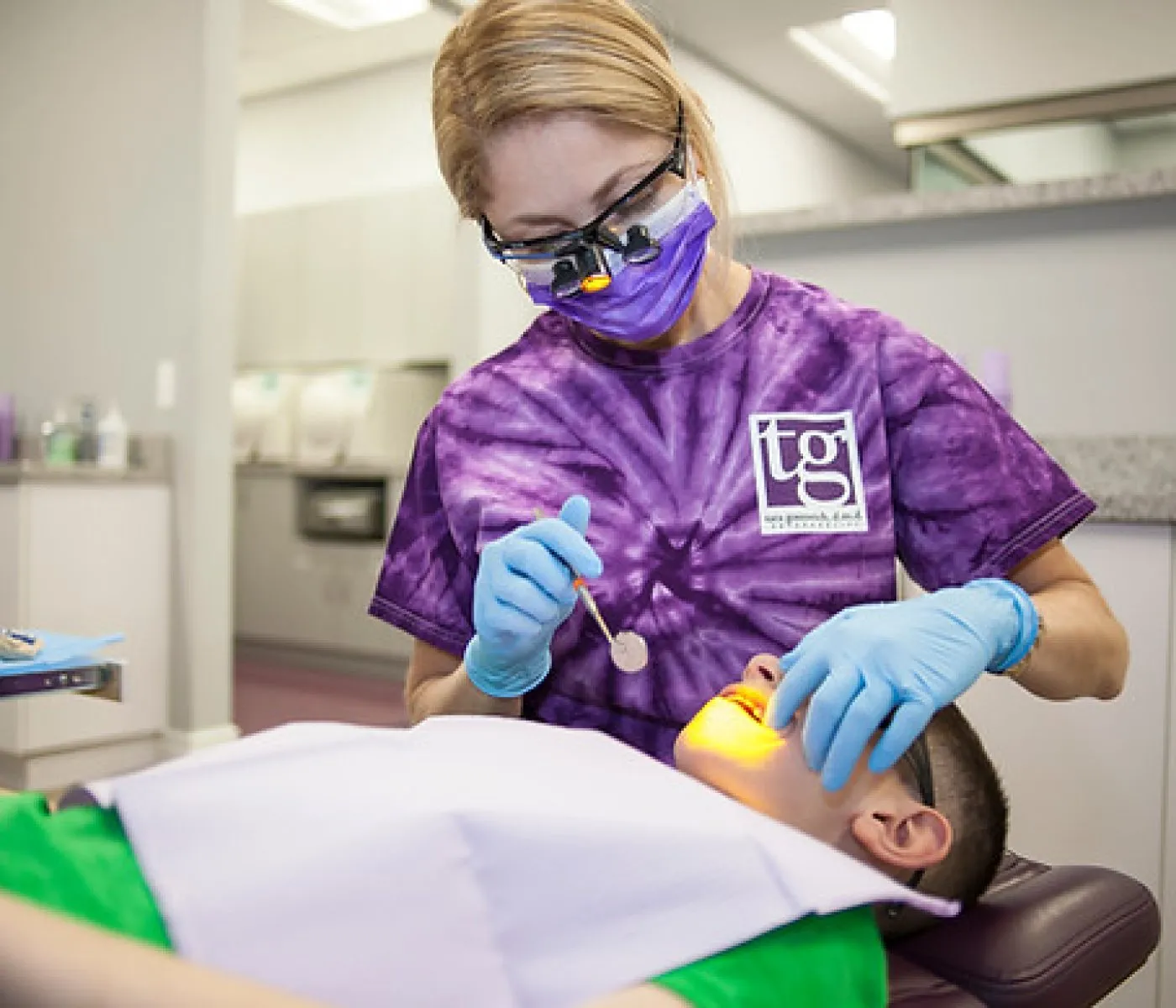
Getting braces is a big step toward the smile you've always wanted. At TG Orthodontics in New Jersey, most people want to know one thing before anything else: is this going to hurt? LightForce braces cause temporary soreness, not lasting discomfort. Most patients describe it as pressure or tenderness that fades within days. Here's what to expect and how to feel better fast.
What Does Braces Discomfort Actually Feel Like?
Braces soreness feels like a dull ache or pressure when biting down, similar to the feeling after a tough workout. It's not sharp or intense. The tenderness peaks 24 to 72 hours after placement and fades within days. That's the short answer.
Do braces hurt? Yes, but not the way you might think. Your teeth aren't used to being asked to move, so they push back a little at first. The soreness is temporary, usually peaking between 24 and 72 hours after placement, then fading steadily over the next few days.
As orthodontist Dr. Tara Gostovich, DMD, explains to patients at our New Jersey practice, this sensation happens because your teeth are beginning to shift in response to the gentle, consistent force from your brackets and wires. It's actually a sign that your treatment is working. The periodontal ligaments surrounding each tooth stretch and compress as teeth move into their new positions, which triggers that achy feeling.
By the end of your first week, most of that initial soreness is behind you. The worst is over, and it only gets easier from there.
Those brackets and wires take some getting used to, though. Expect some soft tissue irritation as your cheeks and lips toughen up against the hardware. Small sore spots can pop up at first, but your mouth adapts quickly. Orthodontic wax becomes your best friend during this adjustment period.
Here's the good news: the anticipation is often worse than the reality. Once you know what to expect, you can prepare, and that makes all the difference.
Your First Week with Braces: A Day-by-Day Timeline
Your first week with LightForce braces follows a predictable pattern: no soreness on placement day, peak tenderness on days two and three, and steady improvement by day seven. Here's the day-by-day breakdown:
- Day 1 (Placement Day): The visit itself is completely comfortable. Your smile expert bonds the brackets to your teeth and threads the wire through. No needles, no drilling. You'll leave feeling fine, maybe a bit strange with new hardware in your mouth. A few hours later, as your teeth start responding to the pressure, you'll notice the first hints of soreness setting in.
- Days 2-3 (Peak Discomfort): This is when most patients feel the most tenderness. Your teeth may feel sensitive, and biting down on anything firm can be uncomfortable. Eating takes a bit more thought. Totally normal. Your teeth are doing the hard work of beginning their movement.
- Days 4-5 (Turning the Corner): The soreness starts to fade noticeably. Eating becomes easier. You might still feel some sensitivity when you bite into something, but it's much more manageable than the day before.
- Days 6-7 (Adjustment Complete): By now, most patients at TG Orthodontics feel fully adjusted to their braces. Some mild sensitivity may linger, but it's barely noticeable. You've made it through the toughest part.
What About Adjustments?
Each time you come in for a visit, you'll go through a similar cycle, but it's usually milder and shorter than that first week. Your mouth has already learned what to expect, and your teeth respond more smoothly each time.
The Best Ways to Relieve Braces Soreness
The best ways to relieve braces soreness include over-the-counter relievers, orthodontic wax, cold foods and drinks, saltwater rinses, and a soft-food diet during peak tenderness. You don't have to just wait it out. These strategies help you feel better faster:
- Take relievers strategically. Over-the-counter options like ibuprofen or acetaminophen work well. The key is timing: take them before the soreness peaks, ideally a few hours after your visit. Follow package directions and check with your smile expert if you have questions.
- Use orthodontic wax generously. Those little packets of wax? Lifesavers. Roll a small piece between your fingers and press it over any bracket that's rubbing your cheeks or lips. It creates a smooth barrier and gives your soft tissue time to heal. We hand these out at every visit, so you'll always have some on hand.
- Reach for cold foods and drinks. Ice water, smoothies, frozen yogurt, popsicles, anything cold helps reduce inflammation and numb sore areas. You can also apply cold compresses to the outside of your jaw for 10 to 15 minutes at a time.
- Try saltwater rinses. Half a teaspoon of salt in eight ounces of warm water, swished gently. This soothes irritated soft tissue and promotes healing. A few times a day works well, especially after meals.
- Stick to soft foods during peak soreness. Your first few days aren't the time for crunchy snacks or chewy foods. Focus on yogurt and smoothies, mashed potatoes and soft pasta, scrambled eggs, soup and soft bread, bananas and other soft fruits.
What about just giving yourself grace? Your body is adjusting to something new. Take it easy for a few days. Watch a movie. Eat some ice cream. You've earned it.
Braces vs. Invisalign vs. LightForce: Which Hurts More?
Both LightForce braces and Invisalign cause pressure-based soreness as teeth move. That's part of orthodontic treatment. The type of discomfort differs slightly, though.
| Factor | Standard Braces | Invisalign | LightForce Braces |
|---|---|---|---|
| Pressure/Soreness | Moderate, peaks after adjustments | Moderate, peaks with new trays | Moderate, may be reduced with precise force |
| Soft Tissue Irritation | More common (brackets and wires) | Minimal (smooth aligners) | Less than standard (custom fit) |
| Adjustment Frequency | Every 4-8 weeks | New trays every 1-2 weeks | Varies by treatment plan |
| Initial Adaptation | Longer (1 week) | Shorter (2-3 days per tray) | Similar to standard |
Standard braces may cause more soft tissue irritation because brackets and wires sit against your cheeks and lips. Invisalign aligners are smooth plastic, so they're gentler on soft tissue, but each new tray brings a fresh wave of pressure.
LightForce braces use 3D-printed brackets designed specifically for your teeth. Because the force application is precise, pressure goes exactly where it needs to. Some patients find this reduces unnecessary soreness compared to standard brackets, though individual results vary. Dr. Gostovich helps every patient at our New Jersey practice compare these options based on their specific needs and comfort preferences.
Your individual tolerance and biology affect your experience more than the appliance type. Some people breeze through treatment with minimal discomfort. Others feel more sensitive. Your smile expert can walk you through the pros and cons for your specific situation.
When Braces Soreness Signals Something Is Wrong
Normal braces soreness is manageable and fades within days. Contact your smile expert if you experience poking wires, loose brackets, discomfort lasting more than a week, or signs of infection. Here's what to watch for:
A wire that shifts or breaks can poke into your gums or cheeks, causing a sharp or stabbing sensation. This isn't normal soreness. It's mechanical irritation that won't resolve on its own. Use orthodontic wax as a temporary fix and call your smile expert's practice promptly.
A loose or broken bracket is worth reporting too. When a bracket comes loose, it can rub against soft tissue and cause irritation. It also means that tooth isn't receiving proper treatment force, so getting it rebonded keeps things on track.
Discomfort lasting more than a week after an adjustment warrants a check-in. While some lingering sensitivity is normal, significant soreness that doesn't improve after seven days may mean something needs tweaking. Severe swelling, bleeding, or signs of infection require immediate attention. Contact your smile expert or seek care right away.
Give your smile expert a call anytime discomfort feels abnormal. There's no such thing as a silly question when it comes to your comfort and safety. Your care team at TG Orthodontics would rather hear from you early than have you dealing with something unnecessarily.
Who Experiences the Most (and Least) Braces Discomfort?
Not everyone experiences braces discomfort the same way. Several factors play a role.
Do Kids Experience Less Soreness Than Adults?
Kids and teens often adapt faster than adults. Their bone tissue is still developing, which means teeth move more easily with less resistance. Adults may experience slightly more soreness because their bone is denser and more established. That said, adults handle the adjustment period well once they know what to expect. Orthodontics is for everyone, and age shouldn't hold anyone back from getting the smile they want.
Does Treatment Complexity Affect Discomfort?
Treatment complexity matters too. Patients with significant crowding, spacing issues, or bite problems may feel more initial pressure. More movement means more force, which can translate to more soreness early on. This typically evens out as treatment progresses.
Early treatment can reduce later discomfort. When orthodontic issues are addressed during childhood, treatment is often simpler and more comfortable. Growth-modifying appliances guide jaw development naturally, potentially reducing the complexity of later treatment.
Technology makes a difference as well. DentalMonitoring allows your smile expert to check on your progress between visits. Potential issues can be caught and addressed before they cause trouble. If something looks off, your care team can reach out proactively, which keeps discomfort to a minimum.
And then there's just biology. Some people have higher tolerance than others. Your experience is valid regardless of where you fall on that spectrum.
Frequently Asked Questions About Braces Soreness
How long do braces hurt after you first get them?
Most patients experience soreness for three to five days after getting LightForce braces. The peak discomfort usually hits around days two and three, then steadily improves. By the end of your first week, the initial adjustment period is typically finished. Some mild sensitivity may linger a bit longer, but it shouldn't interfere with your daily activities.
Do braces hurt when they put them on?
No, the placement visit itself is comfortable. Your smile expert cleans and prepares your teeth, bonds the brackets with a special adhesive, and threads the wire through. There are no needles or drilling involved. You might feel some pressure during the process, but actual soreness doesn't begin until a few hours later when your teeth start responding to the force.
How bad do braces hurt on a scale of 1-10?
In our experience at TG Orthodontics, most patients describe their peak discomfort as moderate, somewhere around a 3 to 5 out of 10. It's uncomfortable but manageable, more annoying than anything else. With proper preparation and the relief strategies listed above, many patients report feeling even better than expected. Most people build it up in their heads far more than the reality warrants.
Do braces adjustments hurt every time?
Yes, adjustments typically cause some soreness, but the good news is that it tends to decrease with each visit. Your mouth becomes more accustomed to the process, and the discomfort is usually milder and shorter-lived than what you experienced during your first week. Most patients find that adjustments become a minor inconvenience rather than something to dread.
Can you go to school or work the day you get braces?
Absolutely. Most patients return to school or work immediately after their braces visit. You might feel a bit strange with new hardware in your mouth, and soreness will set in later that day, but there's no medical reason to stay home. Just plan to eat soft foods and take relievers if needed. Many patients find that staying busy actually helps distract from any discomfort. Our New Jersey patients regularly head right back to their day after getting started.
Getting braces is a smart move for your smile and your confidence. Yes, there's some temporary discomfort involved, but it's manageable, predictable, and short-lived. With the right preparation and support from your care team at TG Orthodontics, you'll adjust faster than you think. We can't wait to meet you! If you're curious about what treatment could look like for you, a smile expert at our New Jersey practice can walk you through your options and answer every question you have.